I Tested Claude ChatGPT Perplexity 10 SEO Tasks

Every week, at least three clients ask me the same question: "Which AI tool should I actually be using for SEO . Claude, ChatGPT, or Perplexity?" Read more about Claude as an AI coding assistant. Read more about Claude vs ChatGPT vs Perplexity for SEO.
For months I gave them the honest but unsatisfying answer: "It depends on what you are trying to do." That answer is correct but not useful when someone is trying to decide where to spend $20 per month.
So I ran the test they kept asking me to run. I took 10 real SEO tasks from my actual client workflows, the exact tasks I run every week on campaigns across US, UK, and European markets, and I gave each task to all three tools under identical conditions. Same input. Same instructions. No special system prompts or tricks. Just what a working marketer would actually do.
The results genuinely surprised me in three ways. Claude won more tasks than I expected. ChatGPT surprised me on one specific task type where I had written it off. And Perplexity, despite winning only one category, turned out to be irreplaceable for that one thing in a way neither of the other tools can match.
Here is everything I found, scored, and what I actually use in my daily workflow after running this test.
How I Ran the Test and What Fair Means
Fair means the same input to every tool. For each task, I used the same raw data or the same brief. I did not engineer special prompts for one tool that I withheld from others. I used the free tier where applicable and noted when a paid feature was involved.
The scoring is based on three criteria: output quality (was the answer actually correct and useful?), output speed (how long did it take to produce something usable?), and edit time (how much work did the output still need before I could use it on a real campaign?).
Each tool scores 1 to 10 per task. The tool with the highest score wins that task. In cases of a tie, I note it and explain why both approaches are valid.
I used Claude Sonnet (free tier at claude.ai), ChatGPT with GPT-4o (free tier), and Perplexity AI (free tier with web search). No paid upgrades were used for this test, because most of the people asking me this question are on free tiers or the $20/month plans.
The Full Scorecard Before You Read On
I am putting the scorecard at the top because I know that is what you came for. If you want to understand WHY each tool won or lost its tasks, the task-by-task breakdowns below go into full detail with actual examples from the test.
| SEO Task | Claude | ChatGPT | Perplexity | Winner |
|---|---|---|---|---|
| 1. On-Page SEO Audit | 9/10 | 6/10 | 2/10 | Claude |
| 2. Keyword Research | 7/10 | 9/10 | 4/10 | ChatGPT |
| 3. Competitor Research | 4/10 | 5/10 | 9/10 | Perplexity |
| 4. Schema Markup | 9/10 | 7/10 | 1/10 | Claude |
| 5. Meta Description Bulk | 7/10 | 9/10 | 1/10 | ChatGPT |
| 6. GEO Optimization | 9/10 | 5/10 | 3/10 | Claude |
| 7. Current Industry Stats | 3/10 | 4/10 | 9/10 | Perplexity |
| 8. B2B Content Brief | 9/10 | 6/10 | 2/10 | Claude |
| 9. Social Media Captions | 6/10 | 9/10 | 1/10 | ChatGPT |
| 10. GSC Data Interpretation | 9/10 | 6/10 | 2/10 | Claude |
Final task wins: Claude 6, ChatGPT 3, Perplexity 1. But those numbers are not the whole story. Perplexity winning only one task category undersells how important that one category is. And Claude's dominance in audit and analysis tasks comes with a caveat that matters for how you structure your workflow.
Task 1: On-Page SEO Audit
Winner: Claude (9/10)
I pasted the full HTML source of a 2,400-word service page into each tool and asked for a complete on-page SEO audit covering title tag, meta description, H1 through H3 hierarchy, image alt text, internal linking, schema markup, and Core Web Vitals signals.
Claude returned a PASS/WARN/FAIL table in under 30 seconds that was immediately usable. Every item was categorized correctly. The recommendations for each WARN and FAIL item were specific and actionable, not "improve your meta description" but "your meta description is 187 characters with no action verb in the first 40 characters. Rewrite to open with a direct outcome statement and cut to under 155 characters." That level of specificity is what separates a useful audit from a generic one.
ChatGPT produced a reasonable audit but buried the critical issues in long explanatory paragraphs. The information was largely correct but required significant editing to extract the actionable items. Scored 6/10 for quality and format.
Perplexity is not designed for this task. It attempted to search the web for information about the page rather than analyzing the pasted HTML. Not suitable for on-page audits. Scored 2/10.
The specific advantage Claude has here is its 200,000-token context window. The page HTML, target keyword, competitor URL, and current schema markup all fit in one conversation. No other free tool handles this volume in a single session. For the full audit workflow using Claude, the step-by-step Claude SEO audit guide covers every phase with copy-paste prompts.
Task 2: Keyword Research and Brainstorming
Winner: ChatGPT (9/10)
This one surprised me. I gave all three tools the same seed keyword and asked for 50 long-tail variations organized by search intent (informational, commercial, navigational). I expected Claude to win this based on its analytical strength.
ChatGPT was faster and produced more genuinely varied output. Where Claude gave me well-organized but somewhat predictable variations, ChatGPT found angles I had not considered and labeled intent with more nuance. The output required almost no editing. It also naturally surfaced People Also Ask-style questions that mapped directly to content opportunities.
Claude scored 7/10. The output was high quality and well-organized but less creative in its angle generation. Better for taking a large keyword list and clustering it, a task that comes later in the workflow.
Perplexity scored 4/10 for keyword brainstorming. It searched the web for existing content about the keyword rather than generating new variations. The output was accurate but limited in volume and variety.
The practical implication: use ChatGPT for the volume brainstorming stage of keyword research, then move the full list into Claude for clustering and prioritization. The combination is stronger than either tool alone.
Task 3: Competitor Research with Live Data
Winner: Perplexity (9/10), by a wide margin
This is the one task where Perplexity is not just the winner. It is the only viable option among free tools.
I asked all three tools: "What do the top-ranking pages for [target keyword] currently cover? What subtopics, statistics, and content formats are present in the top 5 results?"
Perplexity searched the live web, read the current top-ranking pages, and returned a sourced summary of what each page covers. Every claim included a citation. The output reflected what is actually ranking today, not what was ranking when the model was trained.
Claude scored 4/10 for this task. It worked from training data and told me what the content landscape looked like as of its knowledge cutoff, which is not the same as what is ranking now. The output was confidently delivered but outdated for competitive analysis purposes.
ChatGPT with browsing enabled scored 5/10. The browsing feature works but is less consistent than Perplexity's search-native architecture. It sometimes fetched pages correctly and sometimes missed key competitor content.
For anyone doing regular competitor content research, Perplexity Pro at $20/month is worth it specifically for Deep Research mode, which produces multi-source research reports on any topic in minutes. I use Perplexity for the research phase of every new client content brief because the sourced output saves 2 to 3 hours of manual SERP analysis per piece.
Task 4: Schema Markup Generation
Winner: Claude (9/10)
I asked all three tools to generate a complete FAQPage JSON-LD schema block for a 6-question FAQ section, plus an Article schema for the same page with correct author, datePublished, dateModified, and image fields.
Claude returned valid, deployment-ready JSON-LD for both schema types. I validated both outputs with Google's Rich Results Test and got zero errors on the first attempt. Claude did not invent field names or use deprecated properties. The nested structure for the FAQPage was correct.
ChatGPT scored 7/10. The schema was mostly correct but included one deprecated property that would have failed validation. One round of editing was needed. Still a strong output but not as immediately deployable.
Perplexity scored 1/10. It returned general information about schema markup rather than the actual JSON-LD code. Not suitable for schema generation tasks.
For SEO consultants generating schema at volume across multiple client sites, Claude is the clear choice. The 47 Claude SEO prompts guide includes prompts 26 through 31 specifically for every schema type you will encounter on a typical client site.
Task 5: Meta Description Bulk Generation
Winner: ChatGPT (9/10)
I gave all three tools the same 10 page titles and target keywords and asked each to generate 3 meta description options per page, 30 meta descriptions total, each under 155 characters with a different hook or CTA.
ChatGPT produced 30 genuinely distinct meta descriptions across the 10 pages. The variations were meaningful, different CTAs, different angles, different opening hooks. Almost none of them felt templated. I could pick the strongest option from each set of 3 immediately.
Claude scored 7/10. The output was solid but tended toward longer, more analytical phrasing that sometimes needed trimming. It was less comfortable with the creative variation requirement, the 3 options per page sometimes felt like 1 option reworded twice.
Perplexity scored 1/10 for this task. Not designed for bulk content generation.
ChatGPT's strength here is its comfort with high-volume iterative variation tasks. When you need 30 different short-form copy options with specific character limits, ChatGPT consistently delivers faster and with more variety than Claude.
Task 6: GEO and AI Overview Content Optimization
Winner: Claude (9/10), the most significant finding of the test
This is the task result that most surprised me, and also the one with the most practical implications for SEO in 2026.
I pasted a 1,800-word blog post and asked each tool to evaluate it for AI Overview citability, specifically: which paragraphs are extractable as standalone citations, which headings have answer-first formatting, which claims need named source attribution, and what structural changes would most improve the probability of the content being cited in Google AI Overviews, ChatGPT search results, and Perplexity answers.
Claude scored 9/10 for a reason that is unique and unreplicable: Claude is itself a large language model. When I ask Claude to evaluate my content from the perspective of "would an LLM extract and cite this paragraph," Claude is doing exactly that. It is not guessing at what AI systems might do. It is performing the evaluation from the inside. The output identified 4 specific paragraphs that were not extractable, explained exactly why (too much hedging, answer buried after context, no named source), and rewrote each one in a more citable format.
ChatGPT scored 5/10. The GEO optimization suggestions were generic, "add more statistics," "use bullet points", without the passage-level specificity that Claude delivered. ChatGPT can evaluate content as a language model but does not consistently frame its evaluation from the AI citation perspective.
Perplexity scored 3/10. It searched for articles about GEO optimization rather than evaluating the pasted content for AI citability.
If you are trying to get content cited in Google AI Overviews, Claude is the only free tool that evaluates your content from the inside perspective of an LLM processing it. For the complete 7-step implementation guide on getting cited in AI Overviews, the AI Overviews citation guide covers every signal with a 13-point checklist.
Task 7: Finding Current Industry Statistics
Winner: Perplexity (9/10), the most important category to get right
I asked all three tools: "What are the most recent statistics on B2B SEO lead conversion rates? I need specific numbers with named sources published in the last 12 months."
Perplexity returned 8 statistics with full source citations, publication dates, and direct links to the original research. Every number was verifiable. The most recent was from February 2026. I could use all 8 in published content immediately because each had a named source I could attribute.
Claude scored 3/10 for this task. It returned statistics from its training data with no ability to confirm how recent they were. Some numbers were accurate, some were outdated, and the citations were partial, tool name but no specific publication date or URL. Using Claude for statistics without verification is a hallucination risk.
ChatGPT scored 4/10. Similar limitation to Claude for data-dependent tasks. The browsing feature helped slightly but was inconsistent at finding specific research publications.
This is the task category where Perplexity is genuinely irreplaceable. For B2B content that needs to be cited in AI Overviews, every statistic requires a named source. Perplexity is the fastest free tool for building the sourced statistical foundation that AI systems reward. I use it before writing every piece of content that will include data points.
Task 8: Content Brief for B2B Audience
Winner: Claude (9/10)
I gave all three tools the same input: a target keyword, a business type (B2B SaaS company selling to CFOs), and a request for a complete content brief including recommended word count, H2 and H3 structure, must-cover subtopics, People Also Ask questions to answer, internal linking targets, and E-E-A-T signal requirements.
Claude produced a brief I could hand directly to a writer. The H2 structure reflected genuine understanding of the B2B buying journey for that persona, it did not just organize content by topic but by the sequence of questions a CFO actually asks during evaluation. The E-E-A-T requirements were specific: "Include a specific case study with named client, verified revenue metric, and timeline. Attribute the outcome to a specific strategic decision, not general expertise."
ChatGPT scored 6/10. The brief was competent but generic. It did not demonstrate specific understanding of the CFO persona's evaluation criteria or the B2B content structure that converts that audience. It would need significant customization before being usable for a sophisticated client.
Perplexity scored 2/10. Not designed for content brief generation.
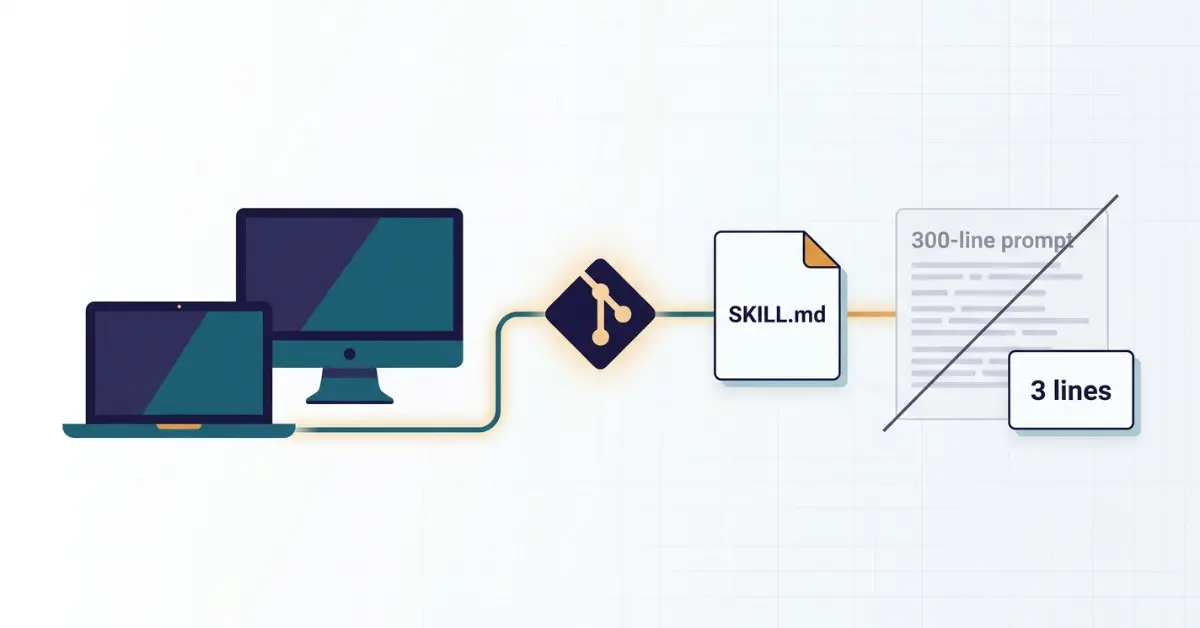
Claude's advantage in content brief creation comes from its ability to reason about the reader's complete journey, not just the keyword. For recurring B2B content brief work, turning this into a Claude skill file means never having to re-explain persona requirements. The Claude SEO skills library covers the content brief skill structure in the Skill 3 section.
Task 9: Social Media Caption Variations
Winner: ChatGPT (9/10)
I pasted a 2,000-word blog post and asked all three tools to write 5 LinkedIn captions, 3 X.com posts, and 2 Instagram captions from the same source content, each with a different angle and hook.
ChatGPT produced 10 pieces of social content that were genuinely distinct from each other. The LinkedIn captions ranged from a data-led opening to a personal story opening to a contrarian take. The X.com posts varied in length and structure. Each felt like a separate editorial decision, not the same caption reformatted.
Claude scored 6/10. The output was polished and well-written but more consistent in tone and structure across the variations. When I need 10 genuinely different social angles from one piece of content, ChatGPT gives me more real options to choose from.
Perplexity scored 1/10. Not a content generation tool.
For content repurposing at scale, converting blog posts into social content across multiple platforms . ChatGPT is faster and delivers more variety. This is the task where ChatGPT's comfort with creative variation and tone-switching produces the most usable output.
Task 10: Google Search Console Data Interpretation
Winner: Claude (9/10)
I exported 90 days of GSC performance data as a CSV and pasted it into each tool with the request: "Identify the top 10 quick-win opportunities, pages ranking between position 8 and 20 with 50 or more impressions, and for each one, tell me the specific change that would most likely move it to page one."
Claude processed the full CSV without hitting context limits and returned a prioritized list of 10 opportunities with specific recommendations for each. For a page ranking at position 14 for a keyword with 280 impressions, Claude did not say "improve the content." It said: "Your H2 heading for this section reads as context-first. Move the direct answer to the first sentence. Add the People Also Ask question that maps to this section as an FAQ entry with FAQPage schema. These two changes address the passage-level extraction gap that is likely holding this page at position 14."
ChatGPT scored 6/10. Hit context limits on the full CSV and needed to work in batches. The recommendations were correct but less specific. It identified the opportunities accurately but the recommendations for each one were more generic than Claude's.
Perplexity scored 2/10. Not suitable for private dataset analysis.
The practical setup for this task: export your GSC performance data monthly, paste it into Claude, run the quick-win analysis, and implement the top 3 recommendations. This 45-minute workflow consistently produces ranking improvements within 30 to 60 days on established pages. For the step-by-step setup connecting Claude directly to GSC data without manual CSV exports, the GSC and Claude MCP prompts section covers the full configuration.
What I Actually Use in My Daily Workflow
Running this test clarified something I had been doing intuitively but had not articulated clearly: the three tools are not competitors. They are three stages of a single workflow, and using them in sequence produces better results than any one tool could produce alone.
Here is the actual sequence I now use on every new content piece:
Stage 1 . Research (Perplexity): Before writing anything, I run the target keyword in Perplexity to understand what is currently ranking, what statistics the top pages cite, and what angles the SERP is rewarding. I collect sourced statistics with full citations. This takes 15 to 20 minutes and replaces 3 hours of manual SERP analysis.
Stage 2 . Strategy and Brief (Claude): I bring the Perplexity research into Claude along with my target keyword, audience persona, and competitive context. Claude builds the content brief: H2 structure, must-cover subtopics, E-E-A-T requirements, internal linking targets, and schema recommendations. This takes 10 minutes and produces a brief I can use immediately.
Stage 3 . Content Production (Claude for analysis, ChatGPT for volume): For long-form analytical content, I draft in Claude because it maintains context across 5,000-word sessions. For high-volume shorter content (meta descriptions, FAQ answers, social captions), I use ChatGPT for speed and variation. This distinction saves roughly 2 hours per week across a typical client portfolio.
Stage 4 . Optimization (Claude): Before publishing, I run the content back through Claude for GEO optimization, the passage-level evaluation that identifies which sections need answer-first restructuring for AI Overview citation probability. No other free tool does this from the LLM perspective.
The Free Stack That Covers 80% of Everything
The most common follow-up question when I share this workflow is: "What does this cost?" Here is the honest answer.
At zero cost: Google Search Console (free, essential), Screaming Frog (free up to 500 URLs for crawl data), Claude free tier at claude.ai (covers tasks 1, 4, 6, 8, 10 with daily usage limits), ChatGPT free tier (covers tasks 2, 5, 9), Perplexity free tier (covers tasks 3 and 7 for standard searches).
At $20 per month: One upgrade unlocks significantly more value. The single best upgrade for most consultants and marketing managers is Claude Pro, which removes the daily usage limits that make the free tier frustrating for heavy audit work. The second-best upgrade is Perplexity Pro, specifically for Deep Research mode which turns 20 minutes of research into 5 minutes.
What this replaces: Surfer SEO ($89/month for content briefs), Clearscope ($170/month for content optimization), manual SERP analysis (3 hours per content piece). The combination of these three free tools replaces $260 to $400 per month in paid subscriptions for the analysis, strategy, and content production layers of SEO work.
What it does not replace: Ahrefs or Semrush for live backlink data and rank tracking. Screaming Frog paid version for site-wide crawls beyond 500 URLs. Those tools still earn their cost for the data gathering layer that AI tools cannot replicate.
For the complete breakdown of which AI tool wins each SEO task with specific workflow recommendations, the full AI SEO tools comparison covers the complete analysis including pricing scenarios for different team sizes.
When Tools Are Not Enough
Thirteen years of running SEO campaigns across four markets has taught me one consistent lesson: tools surface the information, but experience determines what to do with it.
Every tool in this test can run an audit. Claude can tell you what the PASS/WARN/FAIL items are on any page. What it cannot tell you is which of those items, in your specific competitive environment, on your specific domain at its current authority level, targeting your specific audience in the US or UK or Switzerland, should be prioritized in what order to produce the fastest measurable ranking movement.
That decision requires having made the same type of decision in the same type of environment before, and knowing what worked and what did not. That is what 13 years of client campaigns produces. Tools give you the map. Experience tells you which road to take.
For US businesses that need the strategic layer alongside the tool-level analysis, SEO consulting services cover diagnosis, prioritization, and implementation with direct accountability for results. The AI marketing automation service covers building the Claude skills and workflow infrastructure that makes this three-tool sequence run systematically across your entire content operation.
Frequently Asked Questions

Leave a Comment
Your email address will not be published. Comments are moderated before appearing.