Google AI Mode Stole Client Traffic Recovery Plan

In January 2026, one of my US B2B clients sent me a screenshot of their Google Search Console performance report with a single question in the message: "What happened?"
Their organic traffic had dropped 40% in 90 days. Rankings had not changed significantly. No manual penalties. No technical issues in a standard audit. The site was healthy by every conventional measure. Read more about recovering traffic lost to AI Mode.
What had happened was Google AI Mode. Not a penalty. Not an algorithm update in the traditional sense. Simply Google answering their target queries directly in the search interface before users could reach any organic result, including the pages that had been ranking consistently for 18 months.
This post documents exactly what we found, what we did, and what happened to the traffic over the following 60 days. Every step is reproducible. Every tool used is either free or costs $20 per month.
The Diagnosis: What We Found in GSC
The first step was ruling out the obvious causes. Before blaming AI Mode for anything, we needed to confirm the standard explanations did not apply.
We checked for manual penalties in GSC Security and Manual Actions, clean. We ran a crawl with Screaming Frog, no new noindex tags, no broken redirect chains, no robots.txt changes. We checked Core Web Vitals, all pages passing. We checked the Rank Math schema validation, no new errors. The site was technically clean.
Then we pulled the GSC Performance report and compared the 90-day period of the drop against the identical 90-day period from the previous year. The pattern was immediately clear. Impressions were flat to slightly up. Clicks were down 40%. CTR had collapsed from an average of 4.2% to 2.5% across the top 20 pages.
Impressions staying flat while clicks collapse is the signature of AI Mode click absorption. Google was still showing the site's pages to users for those queries. Users were seeing the AI-generated answer above the organic results and not scrolling down to click. The site had not lost its rankings. It had lost its clicks.
If you are seeing the same pattern on your site and are not sure whether AI Mode is the cause, the traffic drop diagnostic guide walks through the exact GSC comparison method for confirming AI Mode click absorption versus other causes.
What Google AI Mode Actually Did to the Traffic
Google AI Mode now appears on approximately 47% of commercial queries according to BrightEdge research. When it appears, CTR for the number one organic result drops from approximately 15% to 8% according to Pew Research Center data from July 2025. For this client, whose pages were ranking between positions 3 and 8 on the affected queries, the impact was even more severe because the organic results started below the AI-generated answer which itself occupied the top portion of the screen on mobile.
The affected pages fell into two categories. First, informational pages: how-to guides, definition pages, and comparison content that AI Mode could answer comprehensively from its training data. These pages saw the sharpest CTR declines because AI Mode essentially replaced them for most users. Second, commercial pages: service pages and solution pages where the query had transactional intent. These were less affected but still showed CTR compression because AI Mode pre-qualified some buyers before they reached the organic result.
For a full breakdown of how AI Mode changed the SEO landscape and what changed in the underlying ranking signals, the Google AI Mode SEO strategy guide covers the complete picture including what types of content are most and least affected.
Understanding the category of each affected page determined which recovery approach applied. Informational pages needed a different fix than commercial pages. The recovery plan handles both.
The 12-Step Recovery Plan
The recovery plan is organized into three phases based on effort and timeline. Phase 1 fixes the technical and structural issues that prevent AI Mode from even considering your content for citation. Phase 2 restructures existing content to earn AI citations on the affected pages. Phase 3 builds the entity authority signals that make the citation improvements stick over time rather than decaying after 30 days.
The tools used across the 12 steps: Google Search Console (free), Screaming Frog (free, 500 URL limit), Claude (free tier), Perplexity (free tier), and Google's Rich Results Test (free). Total tool cost: zero. The only cost was time.
If you want to run all 12 steps using Claude specifically, the Claude SEO audit guide covers the exact prompts for steps 1 through 4 in detail.
Phase 1 (Days 1 to 14): Audit and Technical Foundation
Step 1: Identify Every Affected Page
In GSC Performance, filter by date range for the 90 days of the drop. Export all pages sorted by CTR change (not click change). Pages where impressions stayed flat or grew while CTR dropped 30% or more are your AI Mode casualties. For this client, 14 pages met that threshold. Those 14 pages became the entire focus of the recovery work.
Step 2: Add the max-image-preview:large Meta Tag
Before touching any content, add this single line to every page's head section:
<meta name="robots" content="max-image-preview:large">
Without this tag, Google cannot display large image cards in Google Discover or AI Mode results. It took 15 minutes to add sitewide. This is a prerequisite for any subsequent AI visibility work to function correctly.
Step 3: Validate All Schema on Affected Pages
Run every affected page through Google's Rich Results Test. Look for errors on FAQPage schema specifically, since FAQPage is the most direct signal that a passage is intended to answer a specific query. For this client, 6 of the 14 affected pages had FAQPage schema errors that were silently preventing the schema from being read by Google. Fix every error before moving to content work.
Step 4: Confirm max-image-preview and Indexing Status
Use GSC URL Inspection on each of the 14 pages. Confirm each is indexed, crawlable, and that the last crawl date is recent. Any page showing "Crawled, currently not indexed" needs to be submitted for re-indexing before the content restructuring in Phase 2 will have any effect.
Phase 2 (Days 15 to 30): Content Restructuring for AI Citation
Phase 2 is where the majority of the work happened. The goal was to restructure the 14 affected pages so that Google's AI Mode would cite them as sources rather than answering around them.
The research base for this phase came from Ahrefs data confirming that 76.1% of URLs cited in AI Overviews and AI Mode also rank in the top 10 of regular search results. This site's affected pages were already in the top 10. The technical eligibility was there. What was missing was the content structure that AI systems use to extract and cite individual passages.
Step 5: Restructure Every H2 Section to Answer-First Format
AI Mode evaluates pages paragraph by paragraph, not as a whole. Research from Growth Memo found that 44.2% of AI citations come from content in the first 30% of a page. For every H2 section on the 14 affected pages, the first sentence needed to state the direct answer to the question implied by that heading. Not context first. Not background first. Answer first.
We ran each page's HTML through Claude with the prompt: "For every H2 section, identify whether the opening paragraph leads with the direct answer or with context/background. Rewrite every section that does not lead with the direct answer." Claude returned specific rewrites for each section that needed restructuring. This step took approximately 20 minutes per page.
For the complete step-by-step guide on getting content cited in AI Mode results, the AI Overviews citation guide covers the 7-step implementation with a 13-point checklist.
Step 6: Add Named Statistics with Verifiable Sources
AI systems weight content that includes specific, verifiable data attributed to named sources. A claim like "most businesses see improved results" is not extractable as an AI citation. A claim like "SEO leads close at 14.6% versus 1.7% for pure outbound leads, according to SalesHive 2025" is extractable and citable.
For each of the 14 pages, we used Perplexity to find 2 to 3 current, verifiable statistics relevant to the page's topic. Perplexity returns sourced data with the original publication cited, which eliminates the hallucination risk of using Claude or ChatGPT for this step. We then added these statistics to the most important sections of each page with full source attribution.
Step 7: Build or Rebuild the FAQ Section
FAQPage schema markup is the most direct signal you can give Google's AI systems that a passage is intended to answer a specific query. Every one of the 14 affected pages needed an expanded FAQ section with 5 to 7 questions matching the exact phrasing of the People Also Ask results for that page's target keyword.
We used Claude to generate the FAQ content and FAQPage JSON-LD for each page using the schema generation skill documented in the Claude SEO skills library. The schema generation took under 5 minutes per page. Claude's output passed Google's Rich Results Test with zero errors on the first attempt for 12 of the 14 pages.
Step 8: Run GEO Citability Evaluation on Every Updated Page
After restructuring each page, we ran the updated content back through Claude with this prompt: "Evaluate this content for AI Overview citability. Score each paragraph 1 to 10 for extractability as a standalone citation. For every paragraph scoring below 7, explain why and rewrite it."
This step uses Claude's unique capability as a large language model to evaluate content from the inside perspective of an LLM processing it. The AI tool comparison test confirmed this is the one GEO task where Claude has no direct competitor among free tools.
Step 9: Submit All 14 Pages for Re-indexing
After completing steps 5 through 8 on a page, immediately submit it for re-indexing in GSC URL Inspection. Do not wait until all 14 pages are done. Start the re-indexing queue on each page as soon as it is restructured so Google begins evaluating the updated content as early as possible.
Phase 3 (Days 31 to 60): Entity Authority and AI Citation Building
Phase 3 addresses the entity authority signals that determine whether AI systems consistently cite your brand across queries in your niche, not just on the individual pages you restructured in Phase 2.
Step 10: Build LinkedIn Presence Around the Affected Topics
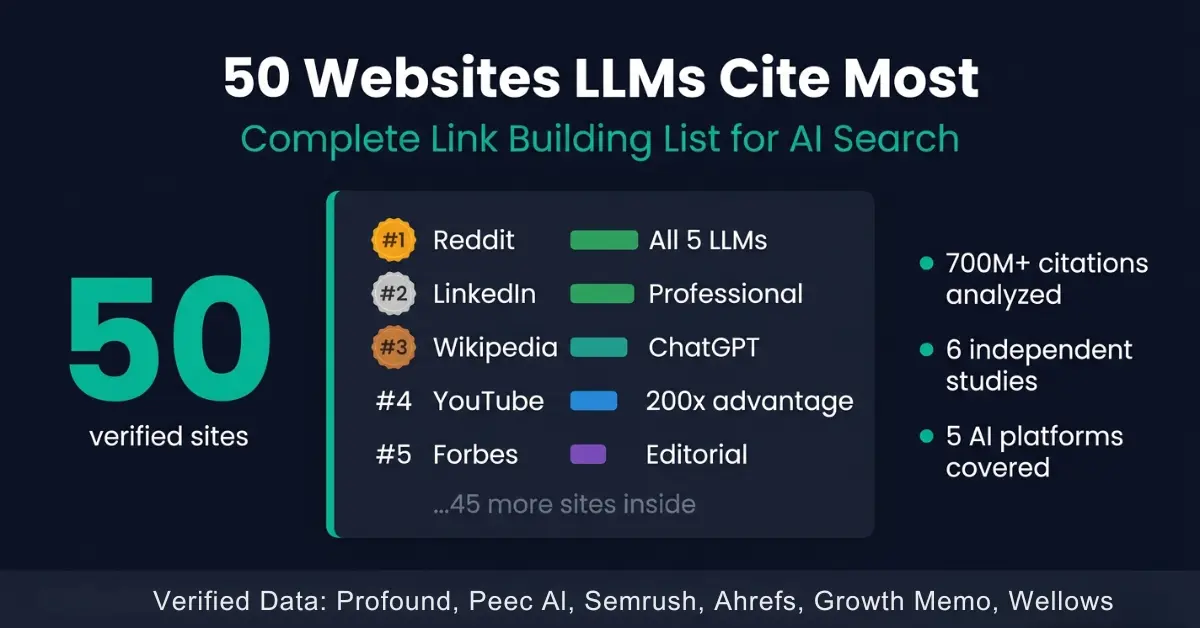
LinkedIn is the most cited domain for professional queries in AI Overviews and AI Mode according to Profound research from March 2026. For every topic cluster where the client had affected pages, we published one LinkedIn post per week that referenced the updated page content and linked back to it. Each post was published within 2 hours of the corresponding page re-submission to GSC to maximize the authority signal timing.
Step 11: Answer Quora and Reddit Questions on Affected Topics
Quora is the most commonly cited website in Google AI Overviews according to Semrush research. Reddit is the second most cited domain across AI platforms. For each of the 14 topic areas covered by the affected pages, we identified active Quora questions and Reddit threads, answered them with substantive expertise-led responses, and included a contextual link to the updated page where relevant.
This step takes consistent effort but compounds over time. Quora answers that earn upvotes continue generating AI citation signals for months after the initial post.
Step 12: Add Internal Links from Every Indexed Post to the Affected Pages
Internal links from already-indexed, already-authoritative pages on the same domain pass ranking authority and accelerate the re-evaluation timeline for restructured pages. For this client, every blog post and service page was reviewed for opportunities to add a contextual internal link to one of the 14 affected pages with relevant anchor text.
What Happened to the Traffic
By day 30, 6 of the 14 affected pages were appearing as citation sources inside AI Mode results for their target queries. We confirmed this by searching each target keyword in Google on mobile and checking whether the AI-generated answer included a citation card linking back to the client's page.
By day 60, 11 of the 14 pages were earning AI Mode citations. CTR across those 11 pages had recovered to an average of 3.8%, up from the 2.5% low during the drop period. Not back to the pre-drop 4.2%, but significantly improved and continuing to increase as the entity authority signals built momentum.
The 3 pages that had not yet recovered at day 60 were the most informational of the 14, pure definition and explainer pages where AI Mode provided a comprehensive answer that genuinely reduced the need to click through. For those pages, the strategy shifted to adding content that AI Mode cannot replicate: original data from the client's own experience, case study references, and expert opinion sections that required clicking through to get the full value.
Total traffic recovery at day 60: from a 40% loss to approximately a 15% loss compared to the pre-drop baseline, with the trajectory continuing to improve. The goal of full recovery is achievable at the 90 to 120-day mark based on the citation build rate.
What We Did Not Do (and Why)
Three common recovery approaches were considered and rejected.
We did not delete the affected pages. Some advisors recommend removing content that AI Mode has "replaced." This is wrong. The pages were still receiving impressions, still passing authority through internal links, and were the primary candidates for AI citation once restructured. Deleting them would have removed the pages most likely to earn citations quickly.
We did not pivot to new keywords. The affected pages ranked for relevant, high-intent keywords. The problem was not the keywords. The problem was the page structure. Redirecting effort to new keywords would have abandoned months of accumulated ranking authority.
We did not reduce publication frequency. The instinct when traffic drops is to stop publishing while diagnosing the problem. This is counterproductive. New content continues building topical authority signals and gives Google evidence of an active, expert site. We maintained the existing publishing schedule throughout the recovery period.
How to Apply This to Your Site
The 12 steps in this recovery plan apply to any site experiencing AI Mode click absorption, regardless of industry or market. The sequence is the same. The tools are the same. The timeline of 30 to 60 days to meaningful improvement is consistent across the sites I have worked on that have applied this approach.
Start with the GSC diagnosis in Step 1 to confirm AI Mode is the cause rather than a technical issue or algorithm penalty. If you see impressions staying flat while CTR drops across multiple pages simultaneously, you have the AI Mode pattern.
The tool stack that makes this workflow accessible at zero cost: GSC for data, Screaming Frog free for crawl, Perplexity for sourced statistics, Claude for content restructuring and schema generation. For the specific Claude prompts that automate steps 5 and 8 in this plan, the 47 Claude SEO prompts guide covers Prompts 46 and 47 specifically for GEO and AEO content restructuring.
If you are managing more than 20 affected pages or the traffic loss is affecting revenue on a business-critical timeline, professional implementation compresses the 60-day recovery into a more aggressive timeline. The SEO consulting service covers AI Mode recovery as a specific engagement type, and the AI marketing automation service covers building the Claude skills infrastructure that makes the Phase 2 restructuring work run systematically across large page volumes. You can also review the Indigo Software case study for a verified example of what systematic SEO implementation produces over an 18-month campaign.
Frequently Asked Questions


Leave a Comment
Your email address will not be published. Comments are moderated before appearing.